
Yoga Teacher Instruction: A Comprehensive Guide (2025)
Yoga, originating from ancient Indian disciplines, encompasses physical postures, breath control, and meditation—a holistic practice for mind-body-spirit integration.
FWFG Yoga, founded by Adriene, offers accessible online resources, fostering authenticity and self-love through diverse yoga practices for all levels.
Beginner-friendly sequences, like ten-minute sessions, build a strong foundation, emphasizing breathwork and alignment for a sustainable, supportive practice.
Embarking on yoga teacher training is a transformative journey, extending far beyond mastering asanas. It’s a deep dive into the philosophical roots of yoga, tracing its history and understanding its profound impact on holistic wellness. This path isn’t solely about learning to teach poses; it’s about cultivating self-awareness, discipline, and a commitment to lifelong learning.
Modern yoga teacher training, as of December 22, 2025, increasingly emphasizes the integration of breathwork (pranayama) and therapeutic applications, recognizing yoga’s potential as a tool for self-inquiry and personal growth. Platforms like Find What Feels Good (FWFG) Yoga demonstrate the growing accessibility of yoga, highlighting the importance of authenticity and self-acceptance in practice.
A comprehensive training program equips aspiring teachers with the skills to safely and effectively guide students of all levels, from beginners exploring foundational poses to experienced practitioners seeking deeper understanding. It’s a commitment to sharing the benefits of yoga with integrity and compassion.
II. The Current Landscape of Yoga Instruction (as of 12/22/2025)
As of December 22, 2025, the yoga instruction landscape is remarkably diverse and rapidly evolving. The demand for qualified yoga teachers remains strong, fueled by a growing awareness of the benefits of yoga for physical and mental wellbeing. Online platforms, such as Find What Feels Good (FWFG) Yoga, are significantly impacting accessibility, offering a wide range of classes and resources to a global audience.
However, this increased accessibility also presents challenges. The market is becoming saturated, requiring teachers to differentiate themselves through specialized training, unique teaching styles, and strong branding. A focus on holistic wellness, integrating yoga with breathwork and therapeutic modalities, is increasingly prevalent.
Furthermore, there’s a growing emphasis on inclusivity and accessibility, catering to diverse body types and abilities. Beginner-friendly sequences and foundational pose instruction remain crucial, ensuring a welcoming environment for all.
III. Choosing a Yoga Teacher Training Program
Selecting the right yoga teacher training program is a pivotal step for aspiring instructors. Careful consideration should be given to accreditation, training focus, and overall program structure. Registered Yoga School (RYS) accreditation, particularly at the 200-hour level, ensures adherence to established standards and is often a prerequisite for professional recognition.
Prospective students should explore various yoga styles – Hatha, Vinyasa, Ashtanga, and others – to identify a training that aligns with their personal practice and teaching aspirations. Programs emphasizing foundational asana, pranayama, and yoga philosophy are essential.
Investigate the instructors’ experience and qualifications, and consider the program’s approach to anatomy, alignment, and teaching methodology. A comprehensive program will equip you with the skills to confidently guide students through safe and effective practices, building a strong foundation for a fulfilling teaching career.
III.1. Registered Yoga School (RYS) Accreditation
Yoga Alliance registration, specifically becoming a Registered Yoga School (RYS), signifies a program’s commitment to upholding recognized standards in yoga teacher training. RYS accreditation isn’t legally required, but it’s widely valued within the yoga community and often expected by studios and potential employers.
RYS 200, 300, and 500 designations indicate the program’s duration and depth of training. A 200-hour RYS program provides a foundational understanding of asana, pranayama, yoga philosophy, anatomy, and teaching methodology.

Choosing an RYS ensures the curriculum meets minimum contact hour requirements and is delivered by experienced, qualified instructors. While accreditation offers assurance, it’s crucial to research individual programs thoroughly, considering their specific style, philosophy, and teaching approach to find the best fit for your goals.
III.2. Different Yoga Styles & Training Focuses
Yoga encompasses diverse styles, each with unique characteristics and benefits. Hatha yoga, a foundational practice, emphasizes physical postures and breathwork. Vinyasa, known for its flowing sequences, links movement with breath. Ashtanga follows a set series of poses, building strength and stamina.
Restorative yoga focuses on deep relaxation and passive stretching, while Yin yoga targets connective tissues through long-held poses. Iyengar emphasizes precise alignment and utilizes props.
Teacher training programs often specialize in specific styles, allowing for in-depth exploration. Some programs offer broader training, covering multiple styles. Consider your personal practice and teaching aspirations when selecting a program. Foundational training builds discipline, self-inquiry, and non-attachment, empowering practitioners.
IV. Core Components of a 200-Hour Yoga Teacher Training
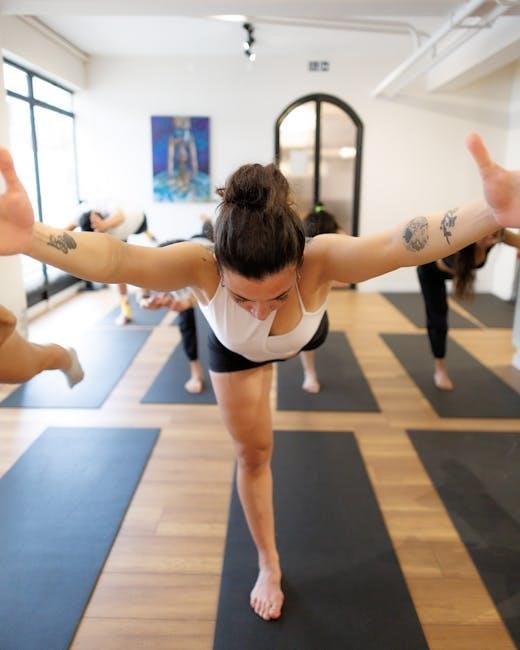
A 200-hour yoga teacher training provides a comprehensive foundation for aspiring instructors. Asana practice, encompassing alignment, modifications, and teaching methodology, forms a core component. Students learn to safely and effectively guide others through postures.
Pranayama, or breathwork, is another essential element, exploring various techniques and their applications for calming the nervous system and enhancing energy flow. Yoga philosophy, history, and lifestyle are also integral, providing context and depth to the practice.
Training emphasizes building a sustainable practice, fostering discipline, and encouraging self-inquiry. Foundational sequences, like ten-minute practices, are explored, preparing teachers to guide beginners effectively. The goal is holistic understanding and confident instruction.

IV.1. Asana: Alignment, Modifications & Teaching Methodology
Asana training within a 200-hour program delves deeply into proper anatomical alignment for fundamental yoga poses. Understanding skeletal structure and muscular engagement is paramount for safe practice and instruction. Modifications are crucial; teachers learn to adapt poses for varying body types, injuries, and limitations, ensuring inclusivity.
Teaching methodology focuses on clear, concise verbal cueing, offering accessible instructions for all levels. Hands-on adjustments, when appropriate and consented to, are also covered. Emphasis is placed on creating a supportive and non-judgmental environment.
Standing poses, often foundational, are analyzed for alignment principles. Building a strong base and understanding weight distribution are key. The aim is to empower students to find their own expression within each pose, fostering body awareness and mindful movement.

IV.2. Pranayama: Breathwork Techniques & Applications
Pranayama, the practice of breath control, forms a vital component of yoga teacher training. Students learn a variety of techniques, including ujjayi (ocean breath), kapalabhati (skull shining breath), and nadi shodhana (alternate nostril breathing). Understanding the physiological effects of each technique is essential.
Applications extend beyond the physical practice; pranayama is explored as a tool for managing stress, calming the nervous system, and enhancing mental clarity. Teachers learn to guide students safely through these practices, offering modifications as needed.
Integration with asana is emphasized – how breath can deepen poses and promote mindful movement. Contraindications for specific pranayama techniques are thoroughly discussed, ensuring responsible instruction. The goal is to empower students to utilize breathwork for overall well-being.
IV.3. Yoga Philosophy, History & Lifestyle
Yoga’s rich philosophical underpinnings, rooted in ancient Indian traditions, are a cornerstone of teacher training. Students delve into the Yoga Sutras of Patanjali, exploring the eight limbs of yoga – a roadmap for ethical living and spiritual growth.
Historical context is provided, tracing the evolution of yoga from its earliest origins to its modern forms. Understanding this lineage fosters a deeper appreciation for the practice. The concept of yoga as a tool for discipline and self-inquiry is central.
Lifestyle considerations are addressed, encompassing principles of ahimsa (non-violence), satya (truthfulness), and tapas (self-discipline). Teachers learn to embody these principles and inspire students to integrate them into their daily lives, promoting holistic wellness.
V. Advanced Yoga Teacher Training (300-Hour & Beyond)
Advanced training builds upon the 200-hour foundation, offering a deeper exploration of asana, anatomy, and teaching methodology. Deepening asana knowledge involves refining alignment, exploring variations, and understanding contraindications for diverse student needs.
Sequencing becomes more sophisticated, focusing on creating thematic classes that address specific intentions or imbalances. Teachers learn to weave together poses seamlessly, considering transitions and energy flow.
Anatomy and physiology are studied in greater detail, examining the biomechanics of yoga poses and their effects on the body’s systems. This knowledge informs safe and effective teaching practices. The goal is to empower teachers to guide students towards sustainable practices, fostering discipline and self-inquiry.
V.1. Deepening Asana Knowledge & Sequencing
Advanced asana study transcends basic alignment, exploring subtle energetic effects and variations for all body types. Teachers learn to discern individual needs, offering modifications and props to ensure accessibility and safety. Refining alignment isn’t about achieving a ‘perfect’ pose, but fostering intelligent movement and body awareness.
Sequencing evolves into an art form, moving beyond linear progressions to create classes with intentional themes and energetic arcs. Understanding transitions is crucial – smooth flows enhance the practice, while abrupt changes can disrupt it.
Teachers learn to build sequences that address specific goals, like building strength, increasing flexibility, or calming the nervous system, integrating yoga’s holistic benefits.
V.2. Anatomy & Physiology for Yoga Teachers
A robust understanding of anatomy and physiology is paramount for safe and effective yoga instruction. This goes beyond memorizing muscle names; it’s about comprehending how the body moves and how poses impact various systems – skeletal, muscular, nervous, and respiratory.
Teachers learn to identify contraindications for specific poses, recognizing when modifications are necessary based on individual student conditions. Understanding common musculoskeletal issues, like back pain or joint limitations, is vital;
The nervous system’s role in yoga is explored, examining how breathwork and asana influence the parasympathetic and sympathetic branches. This knowledge informs sequencing and cueing, promoting relaxation and stress reduction.

VI. Essential Skills for New Yoga Teachers
Transitioning from a yoga practitioner to an instructor requires a distinct skillset. Beyond asana knowledge, effective communication is key. New teachers must develop clear, concise verbal cueing, guiding students safely into and out of poses, offering modifications as needed.

Hands-on adjustments, when appropriate and consented to, enhance alignment and deepen understanding. However, ethical considerations and boundaries are crucial. Teachers learn to observe students carefully, recognizing individual needs and limitations.
Class sequencing isn’t random; it’s a thoughtful progression designed to warm up the body, build strength and flexibility, and cool down effectively. Theme development adds depth, connecting poses to a philosophical or emotional intention.
VI.1. Verbal Cueing & Adjustments
Effective verbal cueing is paramount for guiding students safely and effectively. Cues should be anatomical, focusing on bone placement and muscle engagement, rather than simply describing the shape of a pose. Avoid ambiguous language; be precise and offer options for different levels.
Adjustments, when offered, require sensitivity and consent. A gentle touch can deepen a student’s experience, but always prioritize safety and respect boundaries. Observe students carefully before offering any physical assistance.
Clear instruction builds confidence and prevents injury. Cueing should incorporate breath awareness, linking movement to inhalation and exhalation. Remember, the goal is to empower students to find their own expression of the pose, not to force them into a predetermined form.
VI.2. Class Sequencing & Theme Development
Thoughtful sequencing is crucial for a safe and impactful yoga class. Begin with centering and gentle warm-ups, progressing to more challenging poses, and concluding with restorative postures and Savasana. Consider contraindications and offer modifications throughout.
Developing a theme adds depth and intention to your class. Themes can be philosophical, anatomical, or emotional, providing a unifying thread for the practice. Connect the theme to the asanas, pranayama, and any readings or reflections.
Building a 10-30 minute beginner sequence requires careful consideration of foundational poses. Standing poses establish stability, while seated poses promote flexibility and calm. Remember to balance effort and rest, creating a harmonious flow.
VII. Building Your Yoga Teaching Business
Establishing a yoga teaching business requires a blend of passion and practical strategy. Define your niche – what style of yoga do you excel at, and who is your ideal student? This clarity informs your marketing efforts.
Effective marketing involves building an online presence through a website and social media. Share valuable content, offer introductory workshops, and collaborate with local businesses. Branding is key – create a consistent visual identity and voice.
Finding teaching opportunities can start with studios, gyms, and community centers. Simultaneously, cultivate private clients and explore online platforms like FWFG Yoga to broaden your reach and build a sustainable income stream.

VII.1. Marketing & Branding for Yoga Teachers
Successful marketing for yoga teachers centers on authenticity and connection. Define your unique offering – what makes your classes special? Your brand should reflect this. A professional website is crucial, showcasing your style, schedule, and testimonials.
Social media is a powerful tool. Share engaging content: pose breakdowns, mindfulness tips, and behind-the-scenes glimpses of your practice. Consistency is key. Consider targeted advertising to reach your ideal student.
Branding extends beyond visuals. Your voice, teaching style, and overall energy contribute to your brand identity. FWFG Yoga exemplifies strong branding through its accessible and inclusive approach. Networking with local wellness businesses can expand your reach and build community.

VII.2. Finding Teaching Opportunities (Studios, Private Clients, Online)
Securing yoga teaching positions requires proactive effort. Start by networking within the yoga community – attend workshops, connect with instructors, and express your interest in studios. Many studios require a 200-hour certification as a baseline.
Private clients offer flexibility and potentially higher income. Build a referral network through introductory workshops and community classes. Online platforms, like FWFG Yoga, demonstrate the growing demand for virtual instruction.
Online teaching expands your reach globally. Utilize platforms like Zoom or create pre-recorded classes for platforms like Vimeo or YouTube. Consider offering specialized classes or workshops to attract a niche audience. Building a strong online presence through social media is vital for attracting students.
VIII. Online Yoga Instruction: Trends & Platforms
Online yoga instruction has exploded in popularity, offering accessibility and convenience. The trend leans towards diverse class formats – live streaming, on-demand videos, and hybrid models combining both.
Platforms like Find What Feels Good (FWFG) Yoga exemplify this shift, providing a wide array of practices and fostering a supportive community. Other popular platforms include Glo, Yoga International, and Gaia.
Key trends include shorter, focused classes (10-30 minutes), themed workshops, and personalized programs. Teachers are increasingly utilizing social media (Instagram, YouTube) to build their brand and attract students. High-quality video and audio are crucial for engagement.
Success online requires creating engaging content, consistent scheduling, and active community interaction. Consider offering introductory free content to build trust and attract new students.
VIII.1. Utilizing Platforms like Find What Feels Good (FWFG) Yoga
Find What Feels Good (FWFG) Yoga, founded by Adriene Mishler, presents a unique opportunity for yoga teachers. It’s not simply a hosting platform, but a community-focused ecosystem emphasizing authenticity and self-acceptance.
Teachers can leverage FWFG’s established audience and brand recognition to expand their reach. The platform encourages a holistic approach, integrating yoga with breathwork and mindful movement;
Successful integration involves creating content aligned with FWFG’s values – accessibility, inclusivity, and a non-judgmental atmosphere. Consider offering beginner-friendly classes, themed workshops, or specialized series.
FWFG provides tools for content creation, scheduling, and student engagement. It’s crucial to actively participate in the community, responding to comments and fostering connections. Building a genuine presence is key to attracting and retaining students.
VIII.2. Creating Engaging Online Yoga Content
Engaging online yoga content demands more than simply replicating in-person classes. Prioritize clear audio and video quality – invest in a good microphone and ensure adequate lighting. Visual appeal is crucial; a clean, uncluttered background minimizes distractions.
Structure classes with a clear beginning, middle, and end. Offer modifications and variations to cater to diverse levels. Verbal cues should be precise and descriptive, guiding students safely through poses.
Consider thematic classes, linking poses to a specific intention or concept. This adds depth and encourages mindful practice. Short, focused sequences (10-30 minutes) are ideal for online audiences.
Promote interaction by encouraging students to share their experiences and ask questions. Utilize social media to build community and showcase your unique teaching style. Authenticity and a genuine connection with your audience are paramount.
IX. The Role of Yoga in Holistic Wellness
Yoga’s impact extends far beyond physical flexibility; it’s a powerful tool for holistic wellness, integrating mind, body, and spirit. Consistent practice cultivates discipline, fostering good habits and self-awareness.
Self-inquiry, a core tenet of yoga philosophy, encourages introspection and a deeper understanding of oneself. Non-attachment, another key principle, promotes emotional resilience and acceptance.
Integrating yoga with breathwork (pranayama) amplifies its benefits, calming the nervous system and reducing stress. Combining yoga with therapeutic modalities, like counseling or physical therapy, can address complex health concerns.
Yoga empowers individuals to take ownership of their well-being, fostering a sense of agency and self-efficacy. It’s a pathway to cultivate inner peace, resilience, and a more balanced, fulfilling life, promoting overall health.
IX.1. Yoga as a Tool for Discipline & Self-Inquiry
Yoga’s structured practice inherently cultivates discipline, encouraging consistent effort and commitment. The regular engagement with asanas, pranayama, and meditation builds mental fortitude and self-control, extending beyond the mat.
Self-inquiry, a cornerstone of yogic philosophy, prompts introspection and honest self-assessment. Through mindful awareness of thoughts, emotions, and sensations, practitioners can unravel limiting beliefs and patterns.
This process isn’t about self-criticism but rather compassionate observation. It’s about understanding the ‘why’ behind actions and reactions, fostering greater self-awareness and emotional intelligence.
Yoga provides a safe space to explore vulnerabilities and challenge preconceived notions. It’s a journey of self-discovery, leading to increased authenticity, clarity, and a deeper connection to one’s true self, promoting lasting personal growth.
IX.2. Integrating Yoga with Breathwork & Therapy
The synergy between yoga, breathwork (pranayama), and therapeutic modalities offers a powerful holistic approach to wellness. Conscious breathing techniques, integral to yoga, directly impact the nervous system, reducing stress and promoting emotional regulation.
Integrating pranayama with talk therapy can enhance processing of trauma and facilitate emotional release. Breathwork creates a physiological state conducive to accessing and resolving deeply held patterns.
Yoga’s physical postures release tension stored in the body, complementing therapeutic work by addressing the somatic experience of emotions. This mind-body connection is crucial for comprehensive healing.
A holistic center, as envisioned by some practitioners, would combine yoga instruction, breathwork sessions, and various therapies, creating a supportive environment for profound transformation and lasting well-being, fostering a truly integrated path to health.
X. Foundational Yoga Poses for Beginners
Establishing a solid foundation in yoga begins with mastering fundamental poses. Standing poses, like Mountain Pose (Tadasana) and Warrior poses (Virabhadrasana I, II, III), build strength, stability, and body awareness—essential for progressing to more complex asanas.
Beginner-friendly sequences typically incorporate poses like Child’s Pose (Balasana) for rest and grounding, Downward-Facing Dog (Adho Mukha Svanasana) for stretching and strengthening, and gentle twists to promote spinal mobility.
Short practices, ranging from 10 to 30 minutes, are ideal for newcomers, allowing them to gradually build stamina and familiarize themselves with basic alignment principles.
Focusing on breath throughout each pose is paramount, connecting movement with mindful awareness and cultivating a deeper sense of presence. These foundational poses create a safe and accessible entry point into the transformative practice of yoga.
X.1. Standing Poses: Building a Strong Foundation
Standing poses are often the cornerstone of a yoga practice, serving to ground and strengthen the body while cultivating stability and balance. Mountain Pose (Tadasana) is the foundational posture, teaching proper alignment and body awareness.
Warrior poses (Virabhadrasana I, II, and III) build leg strength, open the hips, and improve core engagement. Triangle Pose (Trikonasana) enhances flexibility and stretches the spine.
These poses require mindful engagement of the legs, core, and spine, promoting a sense of rootedness and presence. Proper alignment is crucial to prevent injury and maximize benefits.
Instructors emphasize distributing weight evenly, engaging the core, and maintaining a relaxed upper body. Standing poses prepare the body for more challenging postures and cultivate a strong foundation for a fulfilling yoga practice.
X.2. Beginner-Friendly Sequences (10-30 Minute Practices)
For newcomers to yoga, starting with shorter, accessible sequences is paramount. A ten-minute practice, as offered by platforms like Find What Feels Good (FWFG) Yoga, can be incredibly effective for building a foundation.
These sequences typically incorporate gentle warm-ups, foundational standing poses like Mountain Pose and Warrior II, and calming cool-down stretches; Emphasis is placed on breath awareness (Pranayama) throughout the practice.
A 30-minute session allows for a more comprehensive flow, potentially including seated forward folds, gentle twists, and restorative poses like Child’s Pose. Modifications are key, offering options for varying levels of flexibility.
The goal is to cultivate body awareness, reduce stress, and establish a consistent practice. Beginners should prioritize proper form over achieving advanced poses, fostering a safe and enjoyable experience.
XI. Continuing Education & Professional Development
The journey of a yoga teacher doesn’t end with a 200-hour or 300-hour certification. Continuous learning is vital for growth, refinement, and staying current within the evolving field of yoga.
Workshops, intensives, and advanced trainings offer opportunities to deepen asana knowledge, explore specialized areas like restorative yoga or yoga therapy, and refine teaching methodology.
Staying informed about anatomy, physiology, and the latest research related to yoga’s benefits is crucial. Exploring platforms like FWFG Yoga can provide inspiration and new perspectives.
Professional development also includes refining verbal cueing, understanding diverse student needs, and cultivating ethical teaching practices. Building a strong personal practice remains foundational, informing and enriching teaching abilities.

XII. Ethical Considerations for Yoga Teachers
Yoga teachers hold a position of trust and influence, demanding a strong commitment to ethical conduct. This extends beyond asana alignment to encompass respect, inclusivity, and mindful boundaries.
Understanding scope of practice is paramount; teachers should not offer medical advice or treat injuries outside their training. Referring students to qualified healthcare professionals is essential.
Maintaining appropriate teacher-student relationships is crucial, avoiding dual relationships or any form of exploitation. Respecting student autonomy and honoring their individual journeys are key.
Cultural sensitivity and appropriation are vital considerations. Acknowledging yoga’s roots and avoiding the commodification of its traditions demonstrates respect and integrity. Continuing education, like that offered through FWFG Yoga, can foster awareness.